How to Cut Dahlias for the Best Vase Life
Dahlias are spectacular flowers.
They’re generous, expressive and wildly beautiful in the garden and vase. But if we’re being honest, they’re not always the longest-lasting cut flower.
Some forms last better than others. Some varieties hold beautifully for a week or more. Others give you five glorious days and then start gently reminding you that all beauty is temporary.
That’s part of their charm.
Flowers are inherently transient and ephemeral, which is a large part of their beauty. I don’t think extended vase life should be the only goal of a flower. If that’s what we’re chasing above all else, we’re probably missing the point a little.
That said, there are absolutely ways to cut dahlias properly, improve their vase life and get the long, strong stems you want for arranging.
Here’s how I approach it.

When is the best time to cut dahlias?
The best time to cut dahlias is first thing in the morning.
After a cool night, the plants are well hydrated and the blooms are at their freshest. This gives your cut flowers the best possible start before they go into the vase.
Some growers do cut in the evening and that can work too, especially once the heat has gone out of the day. But my preference is always morning.
If you can, cut before the sun is properly up and the plants are under heat stress.
Once cut, place stems straight into clean, fresh water. Don’t wander around the garden with a bunch of dahlias in your hand for half an hour admiring your choices. Enjoy them, obviously, but get them into water quickly.

How long do dahlias last in a vase?
Dahlia vase life depends on the variety, form, growing conditions, harvest timing and how you care for them after cutting.
As a general guide, assuming they’re cut fresh:
- Dinnerplates and large decorative dahlias: around 5 days
- Medium to small decorative dahlias: around 5 to 7 days
- Ball dahlias: around 7 to 8 days
- Pompon dahlias: 8+ days
These are not hard rules, but they’re a useful starting point.
Large informal decorative dahlias and dinnerplates usually have a shorter vase life because the heads are heavier, the form is looser and the petals are more exposed. They’re beautiful, but they’re not usually the flowers you grow if vase life is your main concern.
If vase life matters most to you, grow more balls and poms.
Ball and pompon dahlias tend to have tighter forms packed with petals, which helps them last longer in the vase. Picked at the right stage, they can perform beautifully and often give you a week or more.

When to cut dahlia blooms
Dahlias are a little different from some other cut flowers.
Unlike roses, they don’t continue opening much once cut. What you cut is more or less what you get.
That means timing matters.
You don’t want to cut them too tight, because they won’t open properly in the vase. But you also don’t want to wait until they’re fully open and starting to age.
The sweet spot is when the bloom is open enough to show its colour, form and fullness, but not so open that it’s already on the decline.
Avoid cutting dahlias once the centre is open and visible, or when the bloom has been pollinated. This is often referred to as a blown centre. Once the centre is showing, the flower is further along in its life and won’t last as long in the vase.
Look for blooms that are:
- mostly open
- showing good colour and shape
- firm and fresh
- not dropping petals
- not showing an open or pollinated centre
This takes a little practice, but you’ll get your eye in quickly.
Which dahlia forms last longest in a vase?
If you’re growing dahlias specifically for cutting, form matters.

Holland Festival
Dinnerplates and large decoratives
These are dramatic and beautiful, but usually shorter-lived in the vase.
They have larger, heavier heads and looser petals, which makes them more prone to wilting or dropping sooner. They’re still worth growing if you love them. Just enjoy them for what they are rather than expecting them to perform like a ball dahlia.
Expected vase life: around 5 days

Heart Strings
Medium and small decorative dahlias
These are often more practical for arranging than the really large types.
They still give you plenty of shape and colour, but tend to be easier to use in a vase and can last a little longer.
Expected vase life: 5 to 7 days

Winkie Test Eagle
Ball dahlias
Ball dahlias are excellent for cutting.
Their tight, rounded form holds well and they’re very useful in arrangements because they add shape, structure and rhythm.
Expected vase life: 7 to 8 days
 Mi Wong
Pompon dahlias
Pompons are often some of the best performers for vase life.
Their small, tightly packed blooms can last very well when cut at the right stage and kept in clean water.
Expected vase life: 8+ days

How to cut dahlias for long stems
This is the part that makes new growers nervous.
When you first start cutting dahlias, it’s natural to want to cut high on the plant. You see all those side buds and think, “I don’t want to waste future flowers.”
I understand the instinct.
But if you want good stems for arranging, you need to cut deeper.
Dahlias love to be cut hard. Cutting deeper encourages stronger regrowth, better branching and longer stems over time.
To cut a good dahlia stem:
- Choose a bloom at the right stage.
- Follow the stem down several nodes into the plant.
- Make your cut deep enough to give yourself a long, usable stem.
- Strip or trim off the laterals and side buds below the flower.
- Place the stem straight into fresh water.
Those little side buds can feel hard to sacrifice, but they usually won’t give you the same quality stem. If you cut too high, you’ll end up with short stems and a bushy plant full of awkward little laterals.
Once you start cutting deep, you’ll understand why it matters.

Where to cut on a dahlia plant
Look for the main flowering stem and follow it down past the first set of laterals.
Cut several nodes down into the plant rather than snipping just under the flower head.
A node is the point on the stem where leaves or side shoots emerge. Cutting lower on the plant gives you a longer stem and encourages the plant to push new growth from lower points.
For arranging, you want a stem that is:
- long enough to work with (40cm+)
- strong enough to hold the flower head
- clean enough to sit properly in a vase
- free from excess side shoots and foliage below the waterline
After cutting, remove any leaves or laterals that would sit below the water. Foliage in the vase water will break down quickly and shorten vase life.

Use sharp secateurs
Dahlia stems are hollow, which means they can be crushed if your tools are blunt.
Use clean, sharp secateurs and make a fresh cut on a slight angle. A 45-degree angle is ideal because it increases the surface area for water uptake and helps stop the stem sitting flat against the bottom of the vase.
Bypass pruners can crush the stem if they’re not sharp, so keep them clean and well maintained.
You want a clean cut, not a mangled stem.

Get dahlias into water quickly
After cutting, dahlias should go straight into clean water.
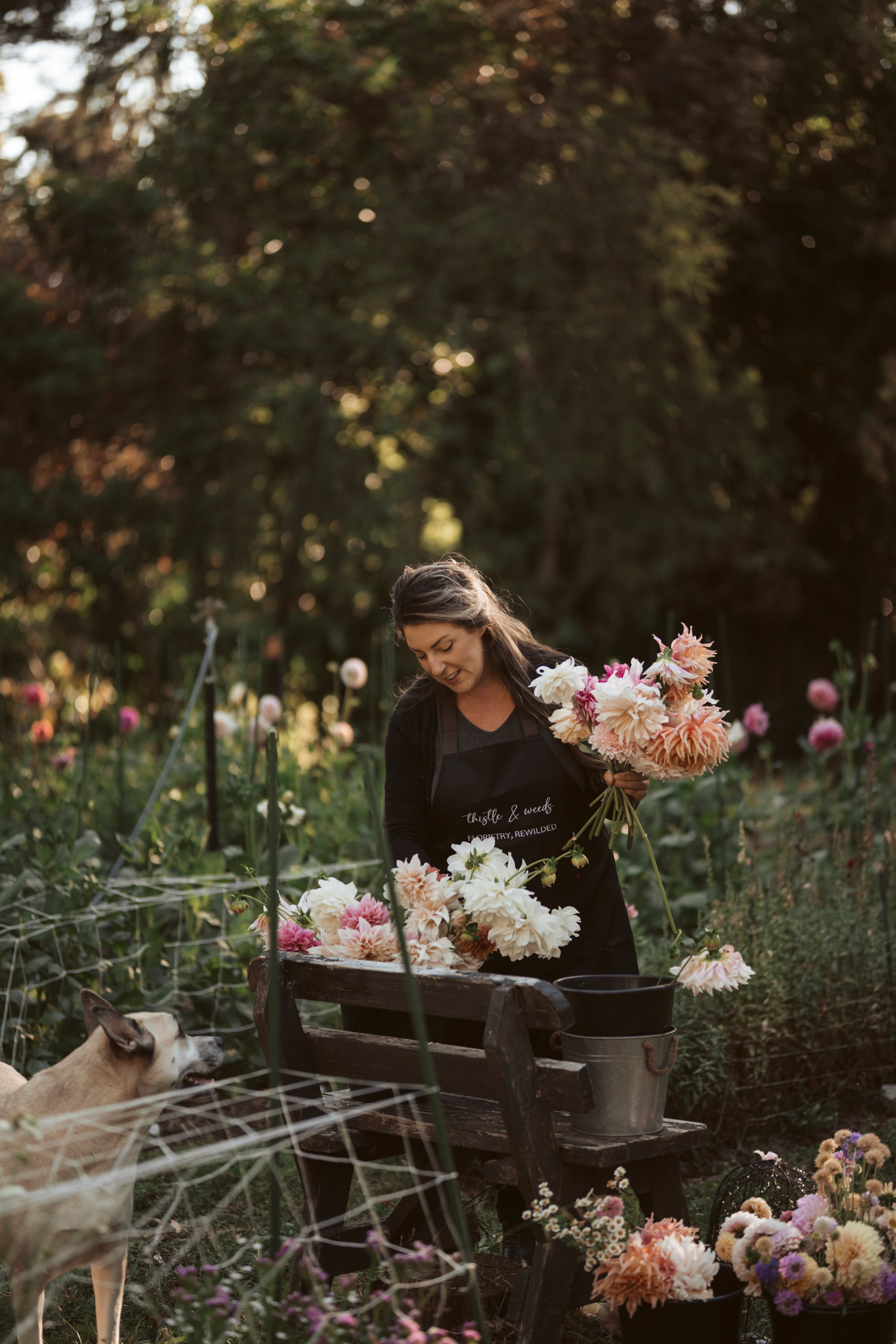
If you’re cutting a lot, take a clean bucket with you into the garden. Cut, strip the lower foliage and place stems into water as you go.
This helps prevent wilting and gives the stems the best chance of hydrating properly before arranging.
If it’s a warm day, don’t leave cut stems sitting in the sun. Move them somewhere cool and shaded as soon as possible.

How to make dahlias last longer in a vase
Once your dahlias are inside, good vase care makes a big difference.
For the best vase life:
- use a clean vase
- start with fresh, cool water
- remove any leaves below the waterline
- keep the arrangement out of direct sun
- keep it away from heat, fruit bowls and draughts
- refresh the water daily
- re-trim stems every two days
Refreshing the water every day and re-cutting stems every couple of days is the best way to get the longest life out of dahlias.
Am I personally disciplined enough to do this every single time? Absolutely not.
Does it work? Yes.
If you want the longest vase life, daily clean water is one of the simplest things you can do.
A note on flower food
You can use flower food if you have it, but clean water is still the main thing.
Flower food won’t save dahlias that were cut too late, left out of water too long or placed in a dirty vase. It helps, but it’s not magic.
If you don’t have flower food, focus on:
- clean vase
- clean water
- no foliage below the waterline
- cool position
- regular water changes
- fresh stem cuts
That will do most of the heavy lifting.

Cutting dahlias often encourages more flowers
One of the best things about dahlias is that cutting them regularly encourages more blooms.
The more you cut, the more the plant is prompted to keep producing.
If you leave flowers on the plant until they fade and go to seed, the plant has less reason to keep pushing fresh blooms. Regular cutting and deadheading keeps the plant productive.
So don’t be too precious.
Cut the flowers, enjoy them inside, give them away, make arrangements!
Life is too short.

Quick guide: cutting dahlias for vase life
If you want the TL;DR version:
- cut first thing in the morning
- choose blooms that are open but not blown
- avoid flowers with open, pollinated centres
- cut deep into the plant for long stems
- use sharp, clean secateurs
- cut stems on a 45-degree angle
- place stems straight into fresh water
- remove foliage below the waterline
- refresh vase water daily
- re-trim stems every two days

Final thoughts
Dahlias may not have the longest vase life of every cut flower, but they more than make up for it in beauty, abundance and variety.
Choose the right stage, cut deeply, use clean water and treat them well, and you’ll get the best from them in the vase.
And if they don’t last forever?
They were never meant to.
That’s the whole dang point.
Sam x
Planning your dahlia patch?
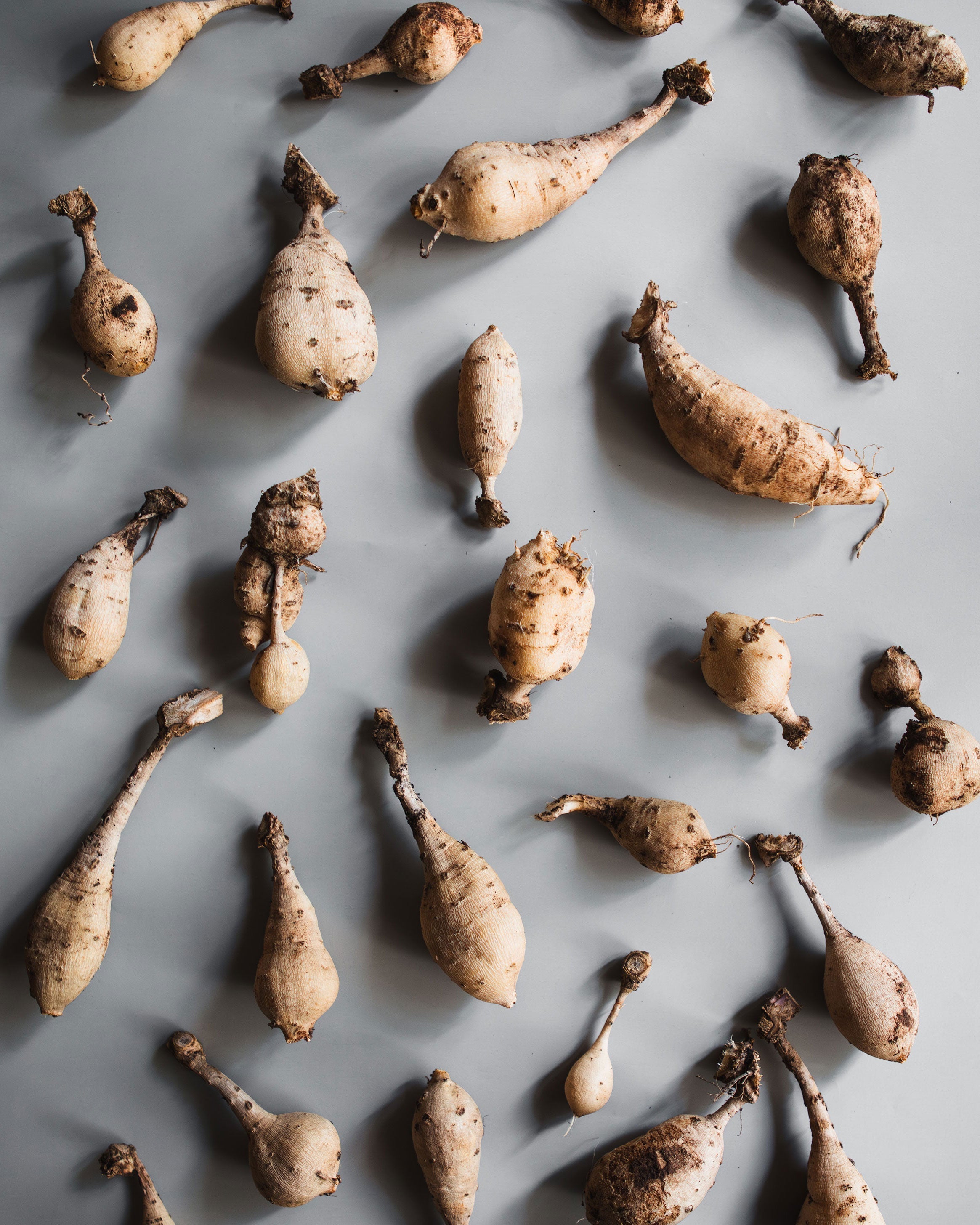
Our dahlia tubers are grown in the Dandenong Ranges, Victoria, then lifted, divided and checked by hand before release.
If you’d like first access when our next dahlia tuber pre-sale opens, join the Dahlia Tuber Waitlist.
Join the Dahlia Tuber Waitlist
You can also browse the dahlia tuber collection to see the varieties planned for release.
Want more dahlia growing notes?
I’ve pulled together a Dahlia Growing Resources page with practical guides on choosing, growing, digging, dividing and storing dahlias.
It’s a good place to start if you’re building your wishlist, planning your patch or trying to work out what to do with your tubers at the end of the season.