Dahlia Varieties Grown in Australia: Colour Flatlays from Our Flower Farm
Every season I photograph as many dahlias as I can because dahlia people love details.
Colour matters. Form matters. Size matters. And if you have ever tried to choose between five different blush pink dahlias online, you already know a single product photo is never quite enough.
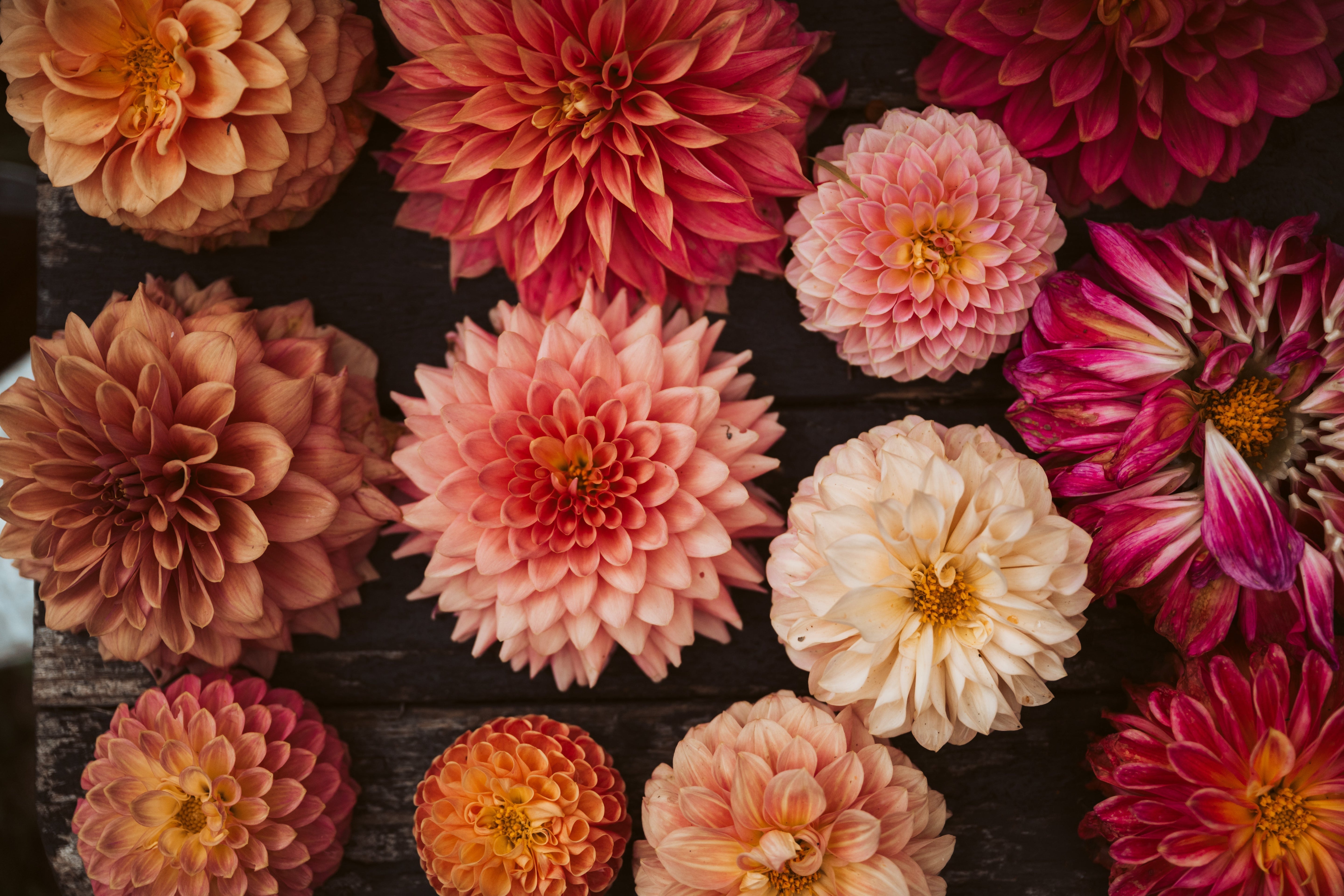
These flatlays are a visual record of varieties grown here at Thistle & Weeds in the Dandenong Ranges, Victoria. They are not studio-perfect catalogue images. They are real flowers from the field, photographed so you can compare colour, form and scale across different varieties.
They are useful if you are planning a cutting garden, choosing dahlia tubers or just trying to work out which pink is actually pink and which one is secretly peach.
Dinnerplate and large decorative dahlia varieties

Large decorative and dinnerplate dahlias are grown for impact.
They are the varieties people tend to notice first because of their size, form and presence in the garden. They can be beautiful for arrangements, but they also need a bit more planning than smaller varieties. Good staking, strong stems and the right picking stage all matter.
In this flatlay you can compare larger decorative and dinnerplate-style varieties including Florelie Antique, Hamari Gold, Devon Apollo, Formby Duke, Formby Monarch, WV Victorian Blush, Penhill Watermelon, Casino Barry, Coorabell Amy, Coorabell Lonny and Peachy.
These are good varieties to consider if you want large flowers for cutting, statement garden planting or bigger arrangements. Just keep in mind that larger blooms may need more support in the field and can be more affected by rain and wind than smaller forms.
Pink, magenta and purple dahlia varieties

Pink, magenta and purple dahlias are useful if you want depth and contrast in the garden.
They can shift a lot depending on light, weather and stage of bloom. Some read bright pink in full sun. Some lean plum, violet or burgundy. This is why comparing them side by side can be more useful than looking at single variety photos.
In this flatlay you can compare varieties including Molly Raven, Coorabell Lonny, Downham Royal, Ryecroft Violet, Winkie Raven, La Recoleta, Formby Perfection, Glenmarc Thiona, Glenmarc Connie, Devon Derris, Elma Elizabeth, Lilac Beauty, Winkie Wanderer and CK Faye.
These varieties are good to consider if you want stronger colour in a cutting garden. They pair well with soft pinks, creams, apricots and darker foliage and they help stop arrangements from feeling too pale or one-dimensional.
Yellow, lemon and orange dahlia varieties

Yellow, lemon and orange dahlias are good for bringing warmth into the garden.
This group can range from soft butter yellow through to peach, apricot, gold and clear orange. Some varieties are softer than they look in photos and others become stronger in colour as the season changes.
In this flatlay you can compare varieties including Gosia Pastello, Florelie Dandelion, Winholme Diane, Otway Gem, Winkie Serenity, Florelie Limonata, Coorabell Texas, Cornflakes, Rokewood Dawn, Golden Leader, Ken’s Gold, Coorabell Sally, Glenbank Honeycomb, Florelie Nectar, Bracken Palomino, Devon Caramello, Bracken Glenda, Sunset, Sport of GM Sophie, Devon Opaline and Hamari Gold.
These colours are useful if you want a warmer palette or if you grow flowers for autumn-style arrangements. They work well with coral, blush, burgundy, cream and white.
Coral, watermelon and warm pink dahlia varieties

Coral and watermelon dahlias sit between pink and orange which makes them very useful in a cutting garden.
They can be easier to work with than very bright orange and often add warmth without taking over the whole arrangement. Some varieties open softer and then deepen. Others shift depending on temperature and stage of bloom.
In this flatlay you can compare varieties including Florelie Flamingo, Lileah Caramel Rose, AK Orange Crush, Jomanda, WV Vic Blush, Carlos Watermelon, Devon Salmon, Coorabell Jessie, Hillier Tanunda, Warraview Watermelon, Coorabell Lily, Florelie Guava, Florelie Lizzie Lou, Coorabell Amy, Formby Perfection, Pink Show, Isabel, Florelie Boysenberry, Coorabell Caitlyn, Black Pearl, Devon Apache, Ivanetti, Everboom Cherry Joy, Florelie Vendetta and Not Formby Rocket.
These varieties are good if you want colour that still feels workable across a lot of palettes. They mix well with peach, cream, soft yellow, burgundy and deeper red tones.
White, cream and pastel dahlia varieties

White, cream and pastel dahlias are often more varied than they seem.
Some are clean white. Some are warm cream. Some have a blush centre or a soft peach undertone. A flatlay makes those differences easier to see, especially if you are choosing tubers online and trying to build a particular colour palette.
In this flatlay you can compare varieties including Café au Lait, AC Casper, Devon Casper, Florelie Antique, Florelie Whipped Cream, Cinderella, Sweet Nathalie, Heart Strings, Kotare Buttermilk, Serenade Symphony, Bilpin Shell Pink, Brian’s Dream, Coconut Ice, Everboom First Dance, Joy Burkitt, Boundary Snowflake, Gosia Pastello and Otway Gem.
These varieties are useful for softer arrangements, neutral palettes and cutting gardens where you want lighter flowers to balance stronger colours. They are also good bridge varieties because they can sit comfortably beside pink, peach, yellow and deeper tones.
Mixed bright and dramatic dahlia varieties

This mixed flatlay shows how much variety you can get from one dahlia patch.
It includes strong reds, dark burgundy, peach, pink, white, lavender and striped varieties. This is useful when planning a garden because it shows how different colours and forms sit together, not just how they look on their own.
In this flatlay you can compare varieties including Holland Festival, Hapet Coppery, Penhill Dark Monarch, Cinderella, Tropical Dream, Cornflakes, Portlight Pair Beauty, US Peaches N Cream, Molly Raven, Lileah Russet Rose, Juliette, Vera’s Elma, Sultan, Edinburgh, Coorabell Lonny, Helena, Glenmarc Topnot and Devon Derris.
These varieties are worth considering if you want a more varied cutting garden with contrast and movement. The darker varieties add weight. The lighter varieties soften the palette. The brighter varieties bring the energy.
Planning your dahlia patch?
Our dahlia tubers are grown in the Dandenong Ranges, Victoria, then lifted, divided and checked by hand before release.
If you’d like first access when our next dahlia tuber pre-sale opens, join the Dahlia Tuber Waitlist.
Join the Dahlia Tuber Waitlist
You can also browse the dahlia tuber collection to see the varieties planned for release.
Want more dahlia growing notes?
I’ve pulled together a Dahlia Growing Resources page with practical guides on choosing, growing, digging, dividing and storing dahlias.
It’s a good place to start if you’re building your wishlist, planning your patch or trying to work out what to do with your tubers at the end of the season.